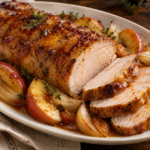
Apple Cider Glazed Pork Loin
A boneless pork loin roast with an apple cider-Dijon glaze, roasted apples, onions, and thyme. Times are estimates.
Servings: 8 servings (⅛ roast, apples, and glaze)
Equipment
- Large Skillet
- Shallow roasting pan
- Small saucepan
- Instant-read thermometer
- Basting brush
Ingredients
Pork and Roasted Apples
- 3 pounds boneless pork loin roast not pork tenderloin; fully thawed; trim very thick exterior fat
- 1 tablespoon olive oil
- 1 teaspoon fine salt
- ½ teaspoon black pepper
- 1 teaspoon smoked paprika
- 1 tablespoon fresh thyme leaves chopped
- 2 large firm apples cored and cut into thick wedges; about 14 ounces prepared
- 1 large yellow onion cut into wedges; about 7 ounces prepared
Apple Cider Glaze
- 1 cup apple cider nonalcoholic drinking cider, not apple cider vinegar
- 2 tablespoons packed light brown sugar
- 1 tablespoon Dijon mustard
- 1 tablespoon apple cider vinegar
- 2 tablespoons unsalted butter
- 3 cloves garlic finely minced or pressed
Instructions
- Heat the oven to 350°F. Pat the thawed pork loin dry. Mix the salt, pepper, smoked paprika, and chopped thyme, then season the roast all over. This recipe uses pork loin, not the smaller pork tenderloin.
- Heat the olive oil in a large skillet over medium-high heat. Brown the pork on its broad sides for about 6–8 minutes total, using tongs to turn it. Transfer fat-side up to a shallow roasting pan. Begin roasting; plan on approximately 60–75 minutes in the oven, checking early because roast thickness changes the timing.
- While the pork roasts, combine the cider and brown sugar in a saucepan. Simmer over medium heat for about 10–15 minutes, until reduced to roughly half its original volume. Stir in the Dijon, vinegar, butter, and garlic; simmer 2–3 minutes more, stirring, until glossy and lightly spoon-coating. It will thicken further as it cools.
- Before any glaze touches the pork or the basting brush, transfer half into a clean covered bowl for serving. Keep that portion separate. Use the remaining half only for basting.
- After 25 minutes of roasting, add the apple and onion wedges around the pork, tossing them in the pan juices. If the pan is dry or the juices are beginning to scorch, add a small splash of water. Turn the wedges once during the remaining cooking time.
- Begin checking the pork after 45 minutes of oven time. When the center is about 130–135°F, brush on a thin coat of basting glaze and continue roasting, glazing once more after about 8 minutes if needed. Check the thickest center in more than one spot, away from the pan: the roast must reach at least 145°F before removal. Loosely tent dark areas with foil if the glaze colors too fast; roast longer if necessary.
- Transfer the pork to a clean board and rest for 15 minutes, which exceeds the minimum 3-minute safety rest. Leave the apples and onions in the oven if they need more time to become tender. Discard unused basting glaze. Warm the untouched serving glaze, slice the roast across the grain, and serve with the apples, onions, and sauce.
Notes
- Use a thermometer rather than a minutes-per-pound rule; a narrow roast can finish sooner than a thick one of the same weight.
- Use drinking apple cider in the glaze. Apple cider vinegar is a separate ingredient and is not a direct replacement for the cider.
- Keep the serving glaze separate before basting. Thin coats near the end prevent the sugars from scorching.
Nutrition
Calories: 445kcal | Carbohydrates: 17g | Protein: 34g | Fat: 26g