This post may contain affiliate links. Please read our disclosure policy.

Table of Contents
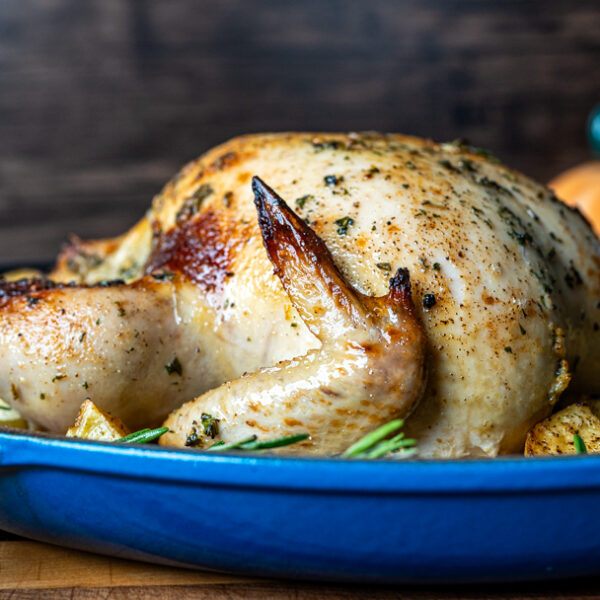
This Garlic Herb Brined and Roasted Chicken starts with a refrigerated garlic-and-herb brine, then gets a layer of lemony herb butter before roasting. It is a flavorful centerpiece for Sunday dinner or a smaller holiday table. Plan ahead for the overnight brine, dry the skin well, and use a thermometer to keep the roast on track.
Why You’ll Love This Recipe
- A Moisture Boost: Brining helps the chicken retain moisture during cooking. A thermometer still matters: even brined chicken can dry out if overcooked.
- Bursting with Flavor: A blend of fresh herbs, garlic, and citrus creates a mouthwatering aroma and taste.
- Easy and Impressive: Simple steps lead to a dish that looks (and tastes) like it came from a restaurant kitchen.
- Perfect for Any Occasion: Ideal for Sunday dinners, holidays, or when you just want to impress your guests.
What Is Brining and Why It Works
Brining is the process of soaking meat in a seasoned saltwater solution. It allows the chicken to absorb moisture and flavor before cooking, resulting in a bird that’s juicy and tender throughout. The salt breaks down some of the muscle proteins, so the meat retains its natural juices.
Adding herbs, garlic, honey, and lemon to your brine enhances both the flavor and aroma of the finished roast.
Ingredients
the Brine
- 1 whole chicken (3–4 lbs)
- 8 cups water
- ⅓ cup kosher salt
- ¼ cup honey
- 3 dried bay leaves
- 5 garlic cloves, lightly smashed
- 1 tablespoon black peppercorns
- 10 sprigs fresh parsley
- 3 sprigs rosemary
- 7 sprigs thyme
- 2 lemons, sliced
Garlic Herb Butter
- ½ cup unsalted butter, softened
- 4 garlic cloves, minced
- 1 tablespoon each: fresh rosemary, thyme, and parsley, finely chopped
- 1 tablespoon lemon zest
- 1 teaspoon Dijon mustard
- Salt and pepper, to taste
For Roasting
- 2 tablespoons olive oil
- Salt and black pepper, to taste
- 1 lemon, halved
- 1 onion, quartered
- 3–4 sprigs each rosemary and thyme
- 1 cup chicken broth (optional, for roasting)
Step-by-Step Instructions
Step 1: Prepare the Brine
In a large pot, combine the water, kosher salt, and honey. Simmer for about two minutes, stirring until the salt dissolves.
Add bay leaves, garlic, peppercorns, lemon slices, and herbs. Bring to a quick boil, then remove from heat and let cool completely.
Tip: Cool the brine promptly in an ice-water bath, then refrigerate until it reaches 40°F (4°C) or colder before adding chicken.


Step 2: Brine the Chicken
Once the brine is chilled to 40°F (4°C) or colder, submerge the whole chicken in a food-safe container. Cover and refrigerate for 8 to 24 hours, keeping it fully immersed and cold throughout.
Remove the chicken without rinsing: splashing raw poultry can spread bacteria around the sink. Pat dry with paper towels and discard the used brine. Wash your hands and clean and sanitize surfaces that touched raw chicken.

Step 3: Make the Garlic Herb Butter
In a small bowl, mix the softened butter with garlic, rosemary, thyme, parsley, lemon zest, Dijon mustard, and a pinch of salt and pepper.
This rich compound butter will flavor the chicken from the inside out and help the skin crisp beautifully.
Step 4: Prepare the Chicken for Roasting
Pat the brined chicken completely dry with paper towels. Rub it all over with olive oil, then season with black pepper inside and out. Go lightly on extra salt because the brine has already seasoned the meat.
Stuff the cavity with lemon halves, onion quarters, and a few sprigs of rosemary and thyme.

Step 5: Apply the Garlic Herb Butter
Carefully loosen the skin over the breast and thighs using your fingers or the back of a spoon. Spread the garlic herb butter evenly under the skin and over the top.
Rub any remaining butter over the wings and legs.

Step 6: Roast the Chicken
Preheat the oven to 425°F (220°C).
Place the chicken breast-side up on a rack in a roasting pan. If desired, add the optional chicken broth to the pan for the drippings.
Roast for about 1 hour to 1 hour and 15 minutes, checking with a food thermometer. The thickest part of the breast and the innermost thigh and wing must each reach at least 165°F (74°C), with the probe away from bone. Continue roasting if needed; the temperature, not the clock or skin color, determines doneness. If the skin begins to brown too quickly, tent loosely with foil.

Step 7: Rest and Serve
Remove the chicken from the oven and let it rest for at least 15 minutes before carving. This step allows the juices to redistribute throughout the meat.
Carve and serve warm, spooning the pan drippings over the slices for extra richness.

Recipe Tips and Variations
- Start with the right chicken: Choose a bird that is not already brined, salted, or injected with a salt solution. Do not rinse raw chicken; pat it dry instead and use added salt sparingly.
- Dry is key: A dry chicken equals crisp skin. Make sure it’s completely patted down before roasting.
- Use fresh herbs: Fresh rosemary, thyme, and parsley make a world of difference in aroma and flavor.
- Add vegetables: Roast carrots, potatoes, or Brussels sprouts in the pan for a one-dish meal.
- Save the drippings: Use the juices from the pan to make a simple gravy or drizzle over the meat.
Storage and Reheating
- Storage: Carve leftovers into smaller portions and refrigerate in shallow containers within 2 hours of cooking, or within 1 hour if the surrounding temperature is above 90°F. Keep at 40°F or colder and use within 3 to 4 days.
- Reheating: Warm slices with a little broth in a covered dish in a 350°F oven until they reach 165°F throughout. Properly chilled leftovers can also be served cold in salads and sandwiches.
- Freezing: Freeze cooled portions in airtight freezer containers or bags for up to 2 months for best quality. Thaw in the refrigerator before reheating.
Serving Ideas
This roasted chicken pairs beautifully with:
- Creamy mashed potatoes or roasted garlic potatoes
- BBQ green beans for a smoky-sweet side, or simply cooked asparagus
- A fresh garden salad or Caesar salad
- Warm dinner rolls or crusty bread
Summarize and Save

Garlic Herb Brined and Roasted Chicken
Video

Ingredients
- Brine
- 1 whole chicken 3–4 lbs
- 8 cups water
- ⅓ cup kosher salt
- ¼ cup honey
- 3 dried bay leaves
- 5 garlic cloves lightly smashed
- 1 tablespoon black peppercorns
- 10 sprigs fresh parsley
- 3 sprigs rosemary
- 7 sprigs thyme
- 2 lemons sliced
- Garlic Herb Butter
- ½ cup unsalted butter softened
- 4 garlic cloves minced
- 1 tablespoon fresh rosemary finely chopped
- 1 tablespoon fresh thyme finely chopped
- 1 tablespoon fresh parsley finely chopped
- 1 tablespoon lemon zest
- 1 teaspoon Dijon mustard
- Salt and pepper to taste
- For Roasting
- 2 tablespoons olive oil
- Salt and freshly ground black pepper
- 1 lemon halved
- 1 onion quartered
- 3 –4 sprigs each rosemary and thyme
- 1 cup chicken broth optional
Instructions
- Combine water, kosher salt, and honey in a large pot. Simmer for 2 minutes, stirring until dissolved.
- Add bay leaves, garlic, peppercorns, lemon slices, and herbs. Bring to a brief boil, then remove from heat.
- Cool completely before adding chicken.
- Submerge the chicken in the cooled brine. Cover and refrigerate for 8–24 hours.
- When ready, remove chicken and rinse under cold water. Pat dry.
- Discard the used brine.
- Mix softened butter, garlic, herbs, lemon zest, Dijon mustard, salt, and pepper in a bowl until smooth.
- Rub chicken all over with olive oil, salt, and pepper (inside and out).
- Stuff the cavity with lemon halves, onion quarters, and a few sprigs of rosemary and thyme.
- Gently loosen the skin over the breast and thighs.
- Spread garlic herb butter evenly under the skin and over the top of the chicken.
- Preheat oven to 425°F (220°C).
- Place chicken breast-side up on a rack in a roasting pan. Add broth to the pan if desired.
- Roast 1–1¼ hours, or until internal temperature reaches 165°F (75°C).
- If browning too quickly, tent loosely with foil.
- Let the chicken rest for 15 minutes before carving.
- Spoon pan juices over slices for extra flavor. Serve warm.
Notes
Nutrition
Nutrition information is automatically calculated, so should only be used as an approximation.

Like This? Leave a comment below!