This post may contain affiliate links. Please read our disclosure policy.
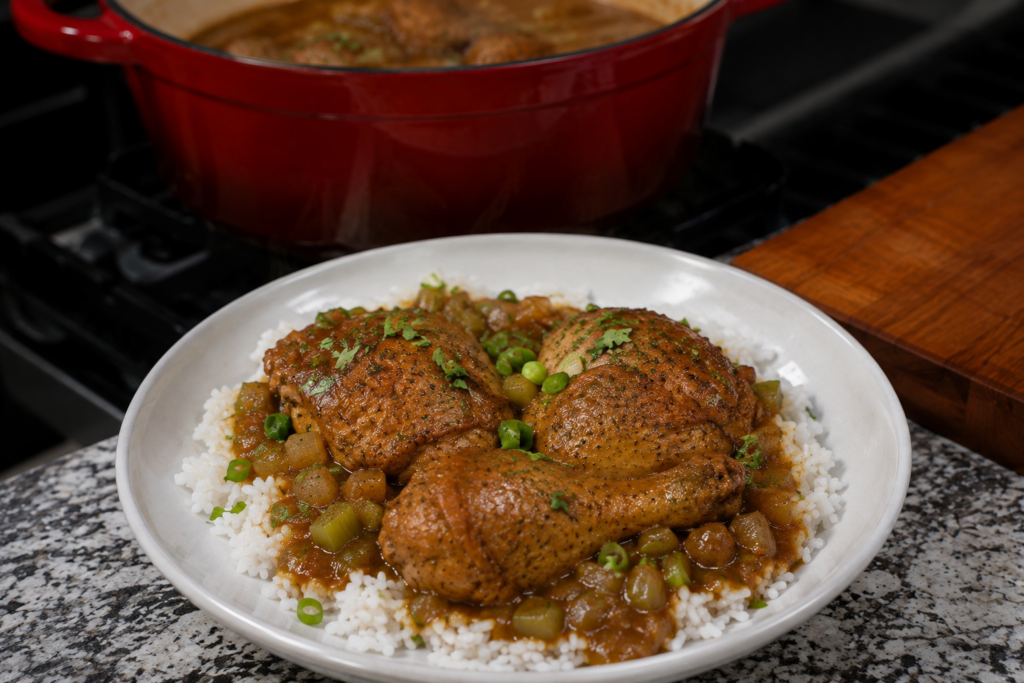
Table of Contents
- 🍽️ A Quick Look at the Recipe
- Key Ingredients
- Why You’ll Love This Recipe
- How to Make Cajun Chicken Fricassee
- Why This Is Fricassee and Not Gumbo
- Why This Is More Than Smothered Chicken
- Variations and Substitutions
- What to Serve With Cajun Chicken Fricassee
- Pro Tips
- Frequently Asked Questions
- Storage and Reheating
- Save This Recipe
- Cajun Chicken Fricassee Recipe
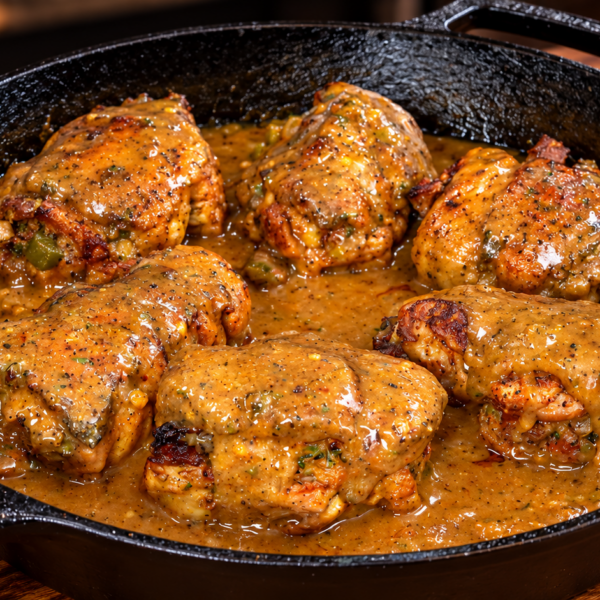
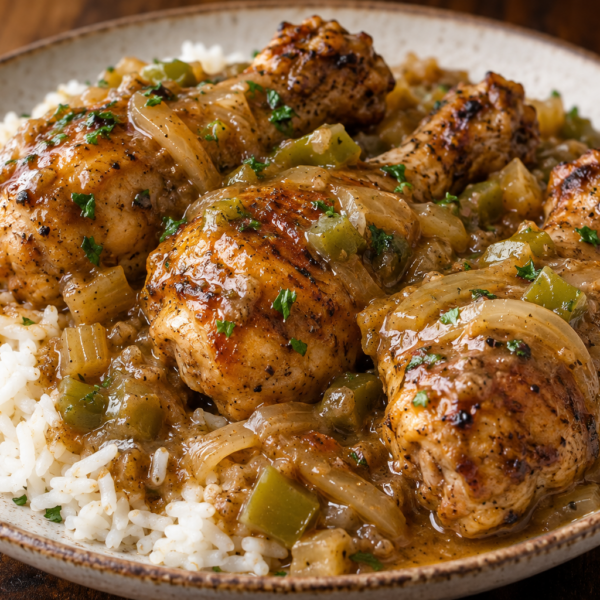
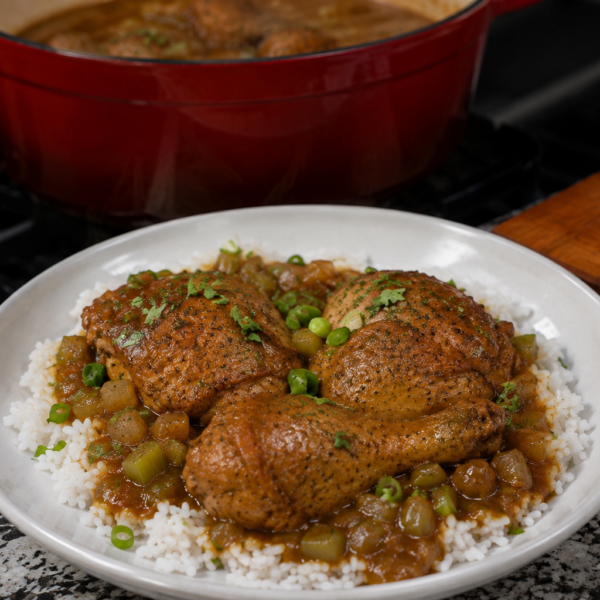
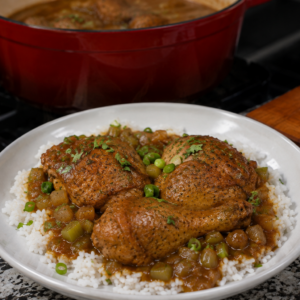
Cajun Chicken Fricassee is made with seasoned bone-in chicken slowly simmered in a dark roux gravy with onions, green bell peppers, celery, and garlic. The chicken turns tender while the gravy develops the deep, roasted flavor that makes this Louisiana comfort food perfect for serving over hot white rice. If you enjoy comforting dishes like Southern Red Beans and Rice or Cajun Chicken and Rice Skillet, this fricassee belongs in the same dinner rotation.
This version builds flavor in layers. The chicken is browned first, the flour and oil are cooked into a dark roux, and the Louisiana trinity is stirred directly into that roux before the broth and chicken return to the pot. The finished dish has a thick, concentrated gravy that separates it from a brothier Creole Chicken and Sausage Gumbo.
🍽️ A Quick Look at the Recipe
Recipe Name: Cajun Chicken Fricassee
⏱️ Ready In: About 2 hours 20 minutes
👨👩👧👦 Serves: 6
🥣 Main Ingredients: Bone-in chicken, dark roux, onion, bell pepper, celery
📖 Dietary Info: Dairy-free as written; check packaged ingredient labels
🔥 Flavor Profile: Savory, peppery, deeply toasted, and mildly spicy
⭐ Best For: Sunday dinner, cool-weather meals, and make-ahead comfort food
Key Ingredients
Bone-In Chicken: Chicken thighs and drumsticks remain moist during the long simmer. The bones also contribute flavor and body to the gravy.
Dark Roux: Flour and oil are cooked together until they reach a deep copper or milk-chocolate color. The dark roux supplies the color, texture, and toasted flavor that define this Louisiana-style fricassee.
The Louisiana Trinity: Onion, green bell pepper, and celery form the aromatic foundation of the gravy.
Garlic: Garlic adds another savory layer. It is added after the trinity begins to soften so it can become fragrant without burning.
Chicken Broth: Broth loosens the roux and provides enough liquid to braise the chicken. Low-sodium broth makes it easier to control the final seasoning.
Worcestershire Sauce: A small amount adds savory depth and acidity to balance the richness of the roux.
Paprika and Cayenne: Paprika contributes color and earthy flavor, while cayenne adds adjustable heat.
Thyme and Bay Leaves: These herbs give the gravy a slow-cooked flavor without overpowering the chicken or roux.
Why You’ll Love This Recipe
- Bone-in chicken stays tender and juicy during the slow simmer.
- The homemade dark roux delivers a deep flavor that a quick flour gravy cannot provide.
- The heat level can be adjusted without changing the character of the dish.
- The thick gravy is ideal for serving over rice, mashed potatoes, or grits.
- The flavor becomes even more developed after the fricassee rests overnight.
- It is made with familiar, affordable ingredients.
- Everything comes together in one heavy pot.
How to Make Cajun Chicken Fricassee
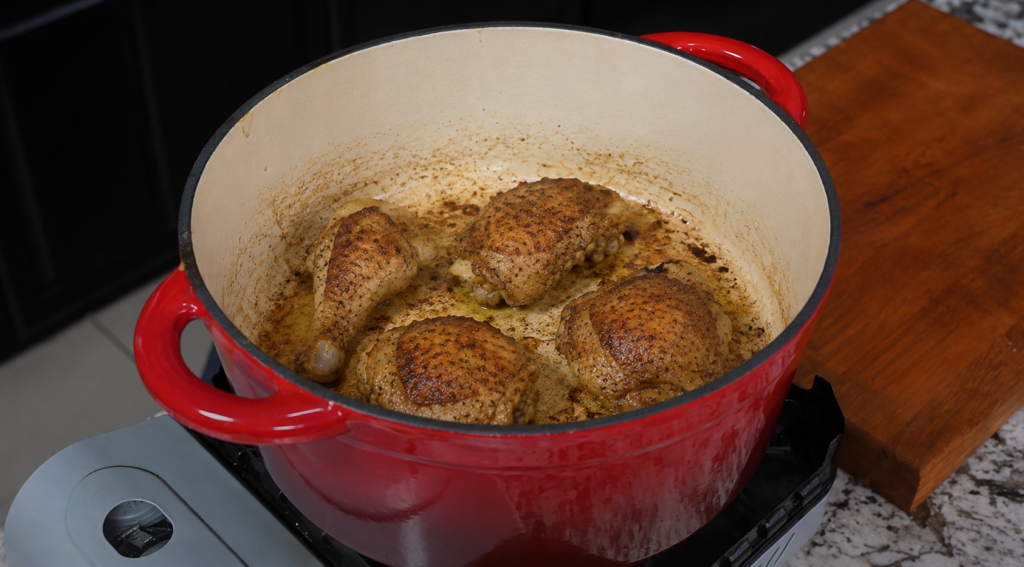
Start by patting the chicken dry and seasoning it with salt and black pepper. Removing the excess moisture helps the chicken brown instead of steaming.
Brown the chicken in batches, leaving room between each piece. This step creates color on the meat and leaves flavorful browned bits in the bottom of the pot. The chicken does not need to cook through because it will finish cooking in the gravy.
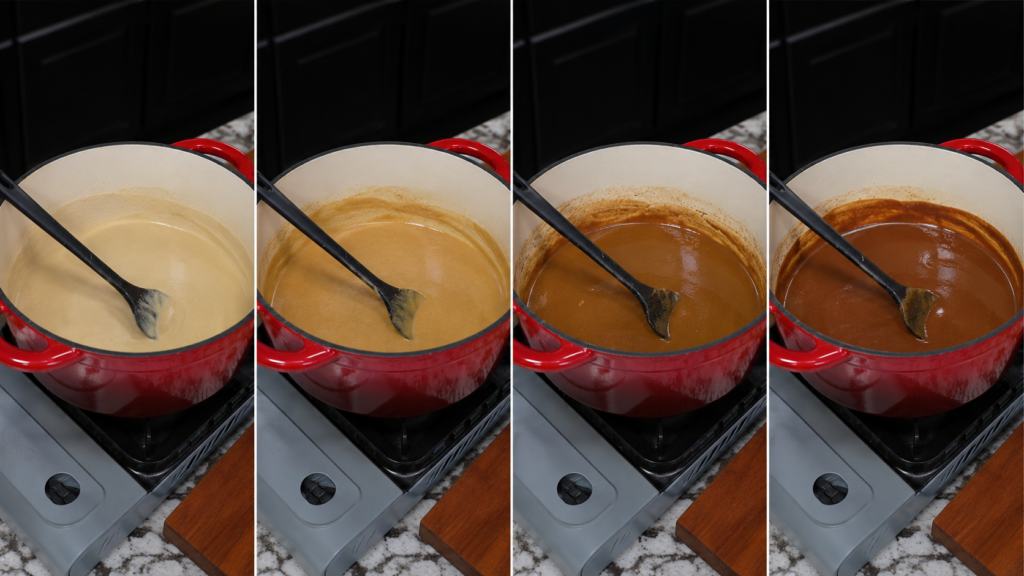
After removing the chicken, add the oil and flour for the roux. Cook the mixture over medium to medium-low heat, stirring constantly. The roux will gradually change from pale blond to tan, then peanut-butter brown, and finally deep copper or milk-chocolate brown.
Stir the onion, bell pepper, and celery into the finished roux. The moisture released by the vegetables cools the roux and slows the browning. Once the vegetables begin to soften, add the garlic and dry seasonings.
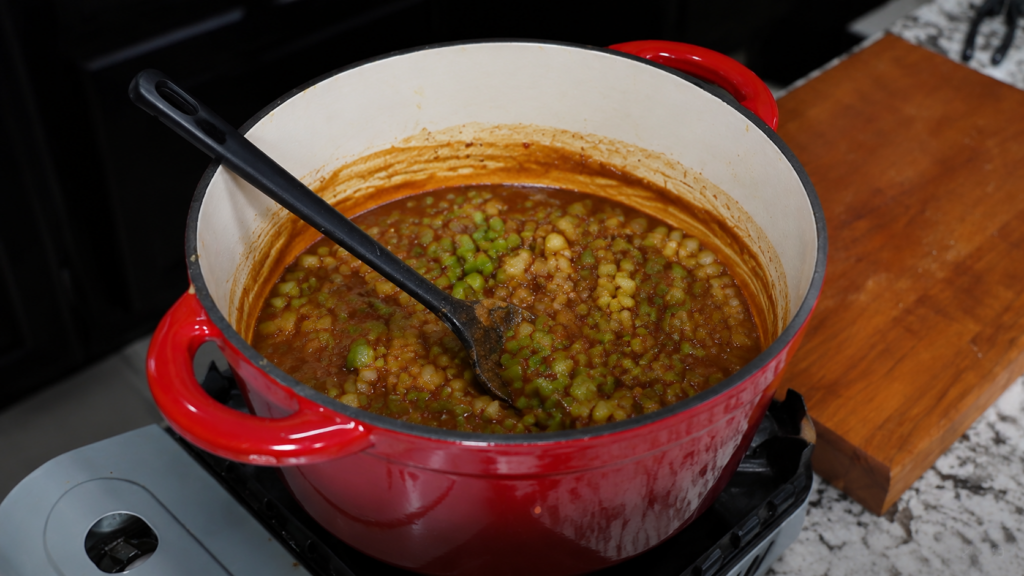
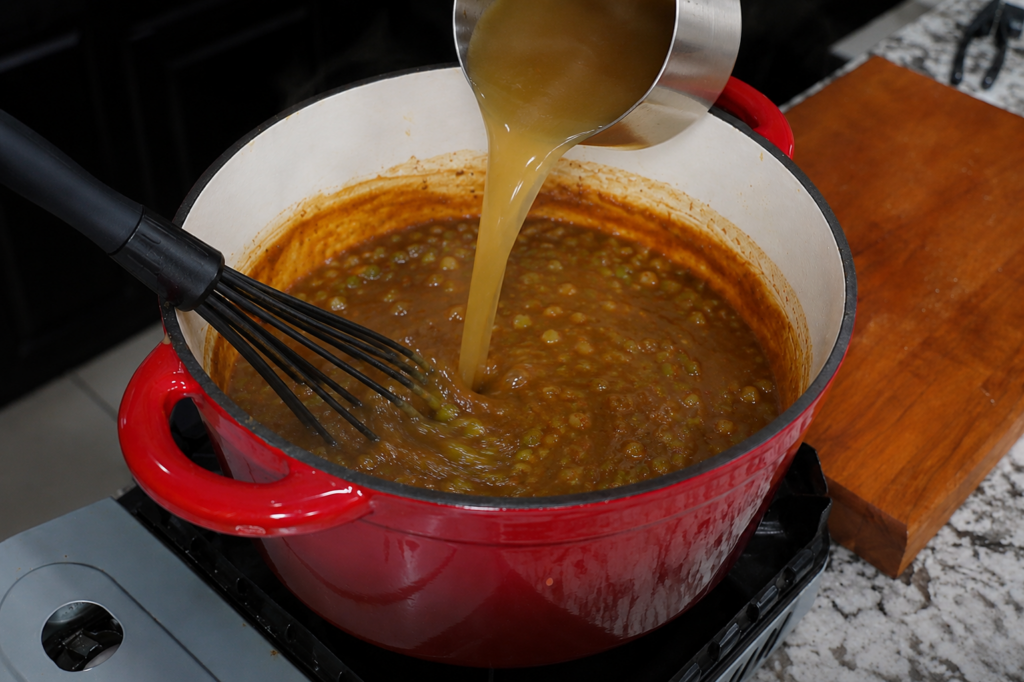
Gradually whisk in warm chicken broth until the gravy is smooth. Add the Worcestershire sauce, thyme, bay leaves, and optional hot sauce before returning the browned chicken to the pot.
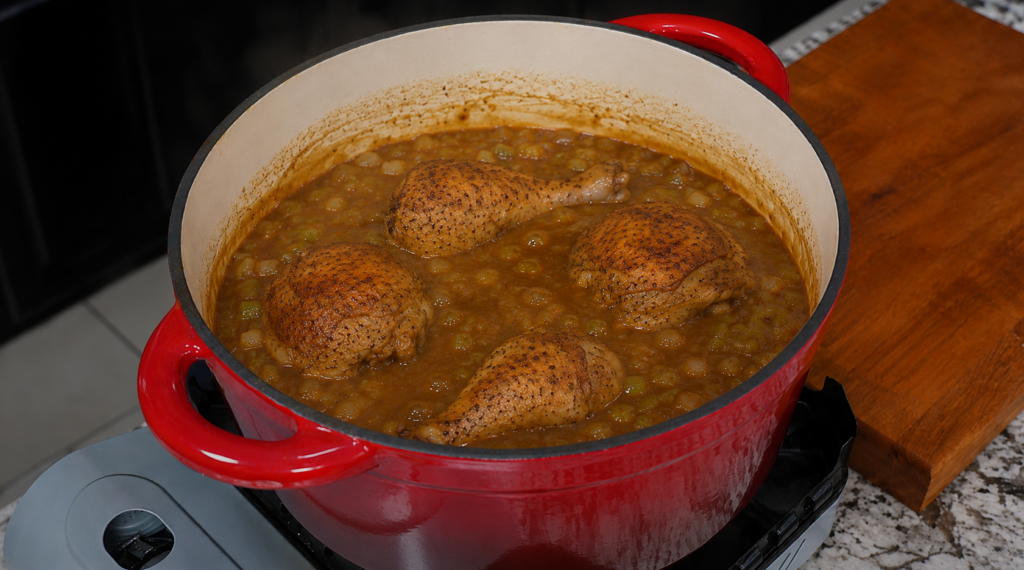
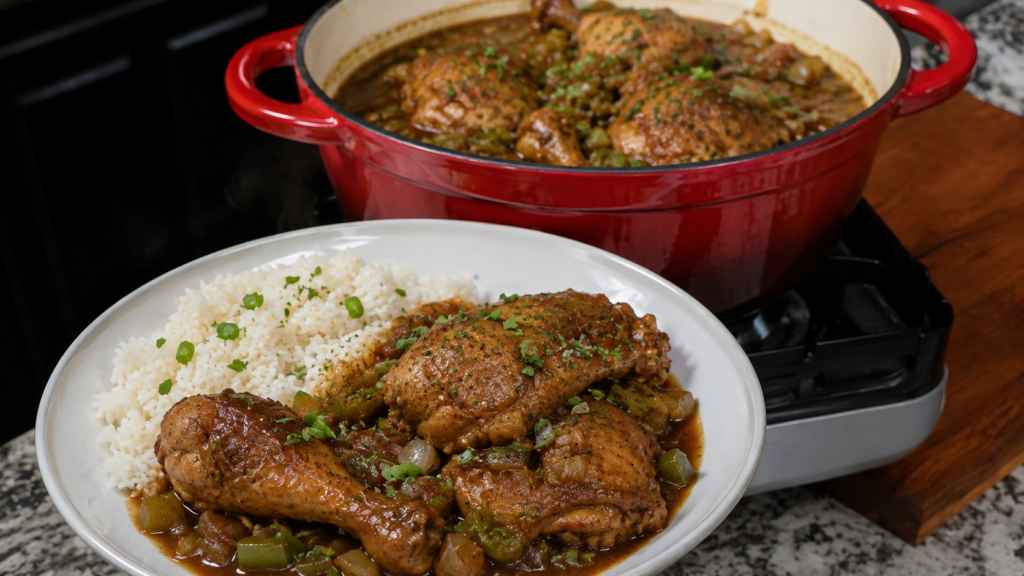
Cover the pot and allow the chicken to simmer gently. Partially uncover it near the end of cooking so the gravy can reduce. The finished gravy should coat the chicken and the back of a spoon while remaining loose enough to serve over rice.
Why This Is Fricassee and Not Gumbo
Chicken fricassee and chicken gumbo can begin with many of the same ingredients. Both dishes may contain chicken, roux, the Louisiana trinity, broth, herbs, and seasonings. The main differences are the proportion of liquid, the final consistency, and the way each dish is served.
Gumbo is generally more broth-forward. It is ladled into a bowl and may contain several proteins, including chicken, sausage, seafood, or smoked meat. Depending on the regional tradition and the cook, gumbo may also include okra or filé powder.
Fricassee contains less liquid. The chicken is slowly braised in a concentrated gravy that clings to the meat. Instead of floating in a bowl of broth, the chicken is plated with the dark roux gravy spooned over the top.
Okra and filé are not used in every gumbo, so their absence alone does not make this dish a fricassee. The more useful distinction is the finished texture: gumbo is ladled, while fricassee is served with a substantial gravy.
Why This Is More Than Smothered Chicken
Fricassee and smothered chicken share several techniques, especially in Louisiana home cooking. Some families may even use the names for very similar dishes.
Smothering describes a method in which meat is surrounded by onions, vegetables, and gravy, then covered and slowly cooked until tender. The gravy may be made with pan drippings, flour coating the chicken, a light roux, or another thickener.
This recipe is identified as fricassee because the dark roux is a separate and deliberate stage of the cooking process. The roux is cooked until it develops a deep color and pronounced toasted flavor before the vegetables and broth are added.
The roux does more than thicken the gravy—it defines the dish. The chicken is cooked using a smothering-style method, but the developed dark roux gives this preparation its fricassee identity.
Variations and Substitutions
Chicken Pieces: Use all thighs, all drumsticks, or a cut-up whole chicken. If using bone-in chicken breasts, begin checking them earlier because white meat can dry out during a long simmer.
Boneless Chicken: Boneless chicken thighs can be substituted. Begin checking them after approximately 30 minutes of simmering. The finished gravy may have slightly less body without the bones.
Bell Pepper: Red bell pepper can replace the green bell pepper for a sweeter flavor.
Heat Level: Reduce or omit the cayenne for a mild fricassee. Add additional cayenne or Louisiana-style hot sauce if you prefer a spicier gravy.
Cooking Oil: Vegetable, canola, avocado, or another neutral high-heat oil will work. Bacon drippings can replace a small portion of the oil, but they will add salt and a noticeable smoky flavor.
Chicken Broth: Unsalted homemade chicken stock can replace packaged broth. Avoid using heavily seasoned stock that may overpower the roux.
Prepared Roux: Store-bought dark roux can save time. Follow the package directions for the amount needed for approximately 4 cups of broth, then adjust the salt and seasonings after the roux has dissolved.
What to Serve With Cajun Chicken Fricassee
Steamed White Rice: Rice is the classic choice because it catches the dark gravy without competing with its flavor.
The Best Homemade Mashed Potatoes: Creamy mashed potatoes turn the fricassee into an especially rich comfort-food dinner.
Creamy Grits: Use the creamy grits from Classic Southern Shrimp and Grits as a mild, creamy base for the dark roux gravy.
Green Beans and Bacon: Tender green beans provide freshness while smoky bacon complements the savory chicken.
Southern Collard Greens with Smoked Turkey Legs: Slow-cooked greens add an earthy, slightly bitter contrast.
Creole Cornbread: This moist, cheesy cornbread is perfect for soaking up the gravy left on the plate.
Buttermilk Biscuits: Warm, flaky biscuits are another good option when you want something soft and buttery alongside the chicken.
Pro Tips
Do Not Walk Away From the Roux: A dark roux can go from properly toasted to burned quickly. Stir constantly and reach into the corners of the pot.
Control the Heat: Medium or medium-low heat provides more control. High heat may burn the flour before it develops an even color.
Watch for Black Specks: A few dark pieces left from browning the chicken are normal. Black specks throughout the roux or a sharp, acrid smell indicate that the flour has burned.
Use a Heavy Pot: A Dutch oven or heavy-bottomed pot distributes the heat more evenly and reduces the chance of scorching.
Warm the Broth: Warm broth blends into the roux more smoothly. Cold broth may cause the roux to seize.
Add the Broth Gradually: Begin with a small amount and whisk until smooth before adding the remaining broth.
Keep the Simmer Gentle: A hard boil can make the chicken tough and cause the flour-based gravy to stick to the pot.
Brown in Batches: Crowding the pot traps steam and prevents the chicken from developing proper color.
Let the Fricassee Rest: The gravy continues to thicken as it cools. Resting also allows the chicken to absorb more of the seasoned gravy.
Frequently Asked Questions
Is Chicken Fricassee Supposed to Have a Dark Roux?
Traditional French fricassee is often associated with a light-colored sauce, but Louisiana fricassee developed into its own regional preparation. Many Cajun versions use a medium or dark roux for their deep brown color and toasted flavor.
Is Chicken Fricassee the Same as Gumbo?
No. Although both may contain roux, chicken, vegetables, broth, and seasonings, fricassee generally contains less liquid. Gumbo is ladled into a bowl, while fricassee is served as chicken covered in a thick gravy.
Is Fricassee the Same as Smothered Chicken?
The dishes overlap, and the names may vary among Louisiana families. Smothering describes the slow-cooking method. This dish is called fricassee because its intentionally developed dark roux is the primary flavor foundation.
Does Chicken Fricassee Need Okra or Filé Powder?
No. This recipe gets its flavor and consistency from the dark roux. Okra and filé powder are more commonly associated with certain styles of gumbo.
Can I Use Store-Bought Roux?
Yes. Prepared dark roux can save time. Follow the product directions and adjust the amount for the volume of broth. Wait until the roux has completely dissolved before adding extra salt or seasoning.
Why Is My Roux Not Getting Dark?
The heat may be too low, or the roux may simply need more time. Continue stirring over medium to medium-low heat. Do not turn the heat up aggressively because the flour can burn.
What Should Dark Roux Smell Like?
Properly cooked dark roux should smell nutty and toasted. If it smells sharp, bitter, or burned, discard it and begin again.
Can Burned Roux Be Saved?
No. Burned roux will make the entire gravy taste bitter. Starting again is the only reliable solution.
Why Is My Fricassee Gravy Too Thin?
Remove the lid and allow the gravy to simmer gently until it reduces. You can temporarily transfer the chicken to a platter if it is already tender. Remember that the gravy will thicken slightly as it rests.
Why Is My Gravy Too Thick?
Gradually stir in warm broth or water until the gravy reaches the desired consistency. Add the liquid in small amounts so the sauce does not become too thin.
How Do I Know When the Chicken Is Done?
The thickest part of the chicken should reach at least 165°F without the thermometer touching the bone. The meat should also be tender and release easily when tested with a fork.
Can I Make Cajun Chicken Fricassee Ahead?
Yes. The flavor becomes more developed after resting overnight. Cool the fricassee promptly, refrigerate it, and reheat it gently before serving.
Storage and Reheating
Refrigerator: Transfer the chicken and gravy to shallow airtight containers within two hours. Refrigerate for up to 3–4 days.
Freezer: Freeze the cooled chicken and gravy in airtight freezer-safe containers for up to 3 months for the best quality. Thaw overnight in the refrigerator.
Stovetop Reheating: Place the chicken and gravy in a covered pot over medium-low heat. Add a splash of broth or water if the gravy is too thick. Heat gently until the chicken reaches 165°F.
Microwave Reheating: Place an individual portion in a microwave-safe dish and cover loosely. Heat in intervals, turning the chicken and stirring the gravy between intervals, until it reaches 165°F.
Save This Recipe
Save this Cajun Chicken Fricassee for the next time you want tender chicken and a deeply seasoned Louisiana-style gravy. Once you learn how to control the dark roux, this comforting dish is one you can return to whenever a slow-cooked dinner is on the menu.
If you tried this Cajun Chicken Fricassee recipe, leave a ⭐ star rating and let us know what you served with it.
Summarize and Save
Cajun Chicken Fricassee
Ingredients
- Chicken
- 4 pounds bone-in chicken thighs and drumsticks
- 2 teaspoons kosher salt divided, plus more to taste
- 1 teaspoon ground black pepper divided
- 2 tablespoons neutral cooking oil
- Dark Roux Gravy
- ¾ cup neutral cooking oil
- ¾ cup all-purpose flour
- 2 cups diced yellow onion
- 1 cup diced green bell pepper
- 1 cup diced celery
- 5 garlic cloves minced
- 2 teaspoons paprika
- 1 teaspoon garlic powder
- 1 teaspoon onion powder
- ½ teaspoon cayenne pepper
- 4 cups low-sodium chicken broth warmed
- 1 tablespoon Worcestershire sauce
- 1 teaspoon dried thyme
- 2 bay leaves
- 1 teaspoon Louisiana-style hot sauce optional
- ¼ cup chopped fresh parsley divided
- 3 green onions thinly sliced and divided
- Cooked white rice for serving
Instructions
- Pat the chicken dry with paper towels. Season all sides with 1½ teaspoons of the kosher salt and ½ teaspoon of the black pepper.
- Heat 2 tablespoons of neutral oil in a large Dutch oven over medium-high heat.
- Working in batches, brown the chicken for 3–4 minutes per side. The chicken does not need to cook through. Transfer the browned pieces to a plate and reduce the heat to medium.
- Carefully add ¾ cup neutral oil to the pot. Sprinkle in the flour and stir until smooth.
- Cook the roux over medium to medium-low heat for 18–25 minutes, stirring constantly. Scrape across the bottom and into the corners of the pot until the roux reaches a deep copper or milk-chocolate color.
- Carefully stir the onion, green bell pepper, and celery into the finished roux. Cook for 6–8 minutes, stirring frequently, until the vegetables begin to soften.
- Add the garlic, paprika, garlic powder, onion powder, and cayenne. Cook for 1 minute, stirring constantly.
- Slowly pour approximately 1 cup of the warm chicken broth into the roux while whisking continuously. Once the mixture is smooth, gradually whisk in the remaining broth.
- Stir in the Worcestershire sauce, thyme, bay leaves, optional hot sauce, remaining ½ teaspoon kosher salt, and remaining ½ teaspoon black pepper.
- Bring the gravy to a gentle simmer. Return the browned chicken and any accumulated juices to the pot. The gravy should reach most of the way up the chicken without completely covering it.
- Reduce the heat to low and cover the pot. Simmer gently for 40 minutes, turning the chicken once during cooking.
- Partially uncover the pot and continue simmering for 15–20 minutes, or until the chicken is tender and the thickest pieces have reached at least 165°F.
- If the gravy is too thin, transfer the chicken to a platter and simmer the gravy uncovered for 5–10 minutes. If it is too thick, gradually add a small amount of warm broth or water.
- Remove and discard the bay leaves. Stir in most of the parsley and green onions. Taste the gravy and add more salt if needed.
- Return the chicken to the gravy. Remove the pot from the heat and allow the fricassee to rest for 10 minutes.
- Garnish with the remaining parsley and green onions. Serve the chicken and dark roux gravy over hot white rice.
Notes
- Stir the roux constantly and discard it if it develops black specks or a sharp, burned aroma.
- Bone-in thighs and drumsticks provide the best flavor and remain moist during the slow simmer.
- Refrigerate leftovers for up to 3–4 days and reheat the chicken and gravy gently to 165°F.
Nutrition
Nutrition information is automatically calculated, so should only be used as an approximation.

Like This? Leave a comment below!