This post may contain affiliate links. Please read our disclosure policy.
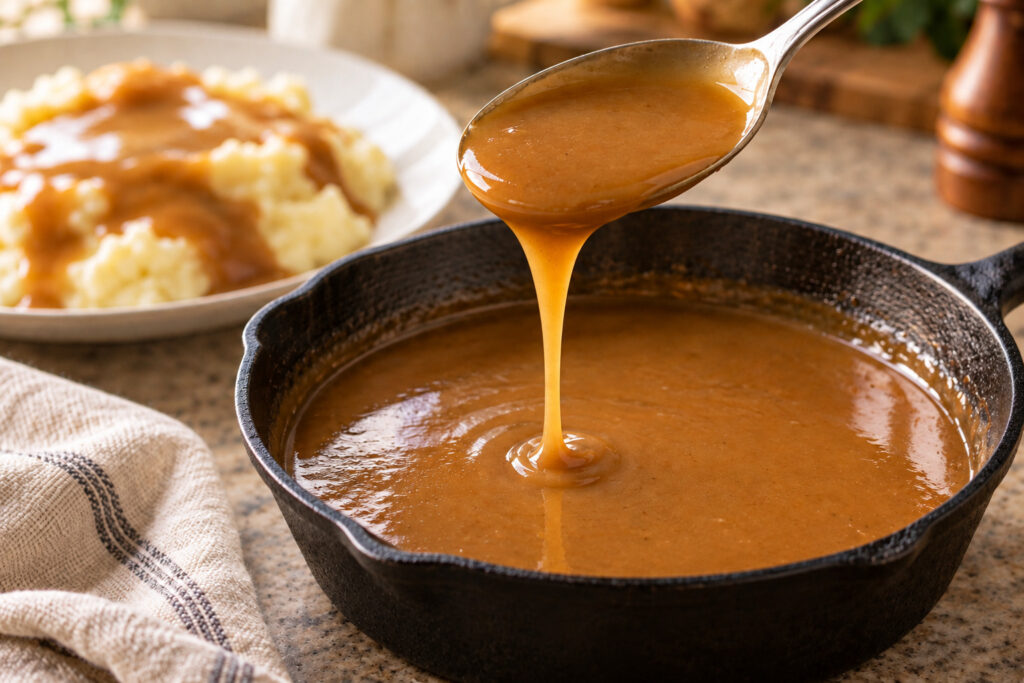
Table of Contents
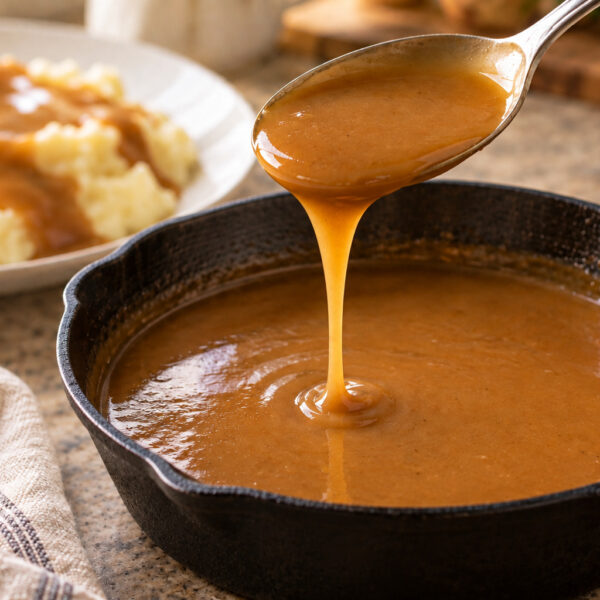
A good homemade gravy can bring a whole meal together. Whether you’re pouring it over mashed potatoes, smothering chicken, or serving it alongside a Sunday roast, you want it smooth, flavorful, and thick enough to coat every bite.
If your gravy has ever turned out lumpy, don’t worry. The secret comes down to three things: mixing your flour into the fat thoroughly, adding your liquid gradually, and whisking as you go. Once you get that method down, you can leave those gravy packets on the shelf.
Once you get comfortable with homemade gravy, put those skills to work in Southern Smothered Meatballs and Rice or Southern Smothered Chicken. Both give that gravy a place to shine.
Why Does Gravy Get Lumpy?
Lumps usually form when dry flour comes into direct contact with hot liquid. The outside of the flour clump thickens before the liquid can reach the flour inside, trapping dry flour in the middle.
That’s why sprinkling flour straight into a pan of hot broth can cause trouble. Instead, start by mixing the flour with fat to make a roux. This helps distribute the flour evenly before you add your liquid.
Adding broth too quickly or leaving flour tucked into the corners of the pan can also leave you with lumps.
What You Need for Smooth Homemade Gravy
This simple recipe makes about 2 cups of gravy.
Ingredients
- 2 tablespoons butter or reserved cooking fat
- 2 tablespoons all-purpose flour
- 2 cups low-sodium chicken, beef, or turkey broth
- Salt and black pepper, to taste
- Optional: garlic powder, onion powder, or a small splash of Worcestershire sauce
Using pan drippings? Separate the fat from the juices. Use 2 tablespoons of the fat in place of butter, then use the juices as part of your 2 cups of liquid. Taste before adding salt because drippings may already be well seasoned.
Want to explore how your stock affects the finished flavor? Take a look at Homemade Chicken Stock Gravy vs. Store-Bought Chicken Stock Gravy before choosing your broth.
Helpful Tools
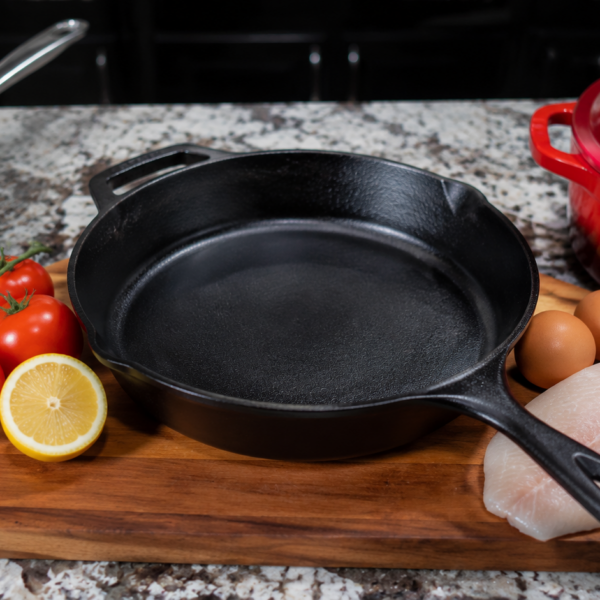
- A saucepan or skillet, such as a seasoned cast-iron skillet
- A whisk, preferably a flat whisk for a skillet
- A measuring cup with a pouring spout
- A fine-mesh strainer, if needed
How to Make Gravy Without Lumps, Step by Step
1. Melt the Butter
Place your saucepan or skillet over medium-low heat. Add the butter and let it melt without burning.
If you’re using cooking fat, warm it gently before adding the flour.
When you’re making a full dinner, those browned bits left in the pan can bring extra depth to the gravy. Southern Neck Bones and Gravy is a hearty example of building flavor in the same pot.
2. Whisk in the Flour
Sprinkle the flour into the melted butter while whisking. Keep mixing until there are no dry patches and the mixture forms a smooth paste.
Cook for about 2 minutes, whisking frequently. This helps cook out the raw flour taste. For a deeper flavor, let the roux turn light golden, taking care not to scorch it.
Don’t rush past this step. A smooth roux gives your gravy a smooth start.
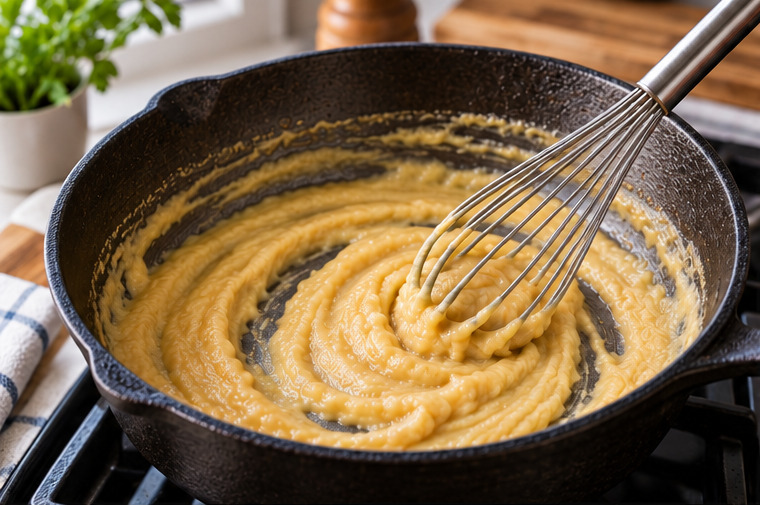
This flour-and-fat foundation is also useful for dishes like Southern Smothered Pork Chops. Follow the amounts in each recipe, but give the flour time to blend in before adding liquid.
3. Add the Broth a Little at a Time
Reduce the heat to low. Pour in about ¼ cup of broth while whisking constantly. The mixture will become thick at first—that’s normal.
Whisk until smooth, then add another small splash. Continue adding the broth gradually, smoothing out the mixture between additions. Once the base is loose and smooth, whisk in the remaining broth in a steady stream.
Room-temperature or cool broth works well with a hot roux. You don’t need boiling broth; the important part is adding it gradually and keeping everything moving.
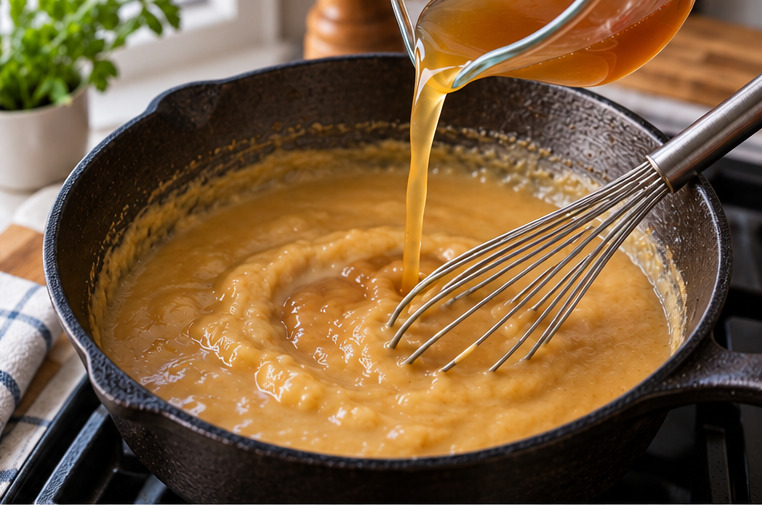
For another way to practice building a gravy base, try Instant Pot Smothered Chicken. Make the base smooth before moving on to that recipe’s pressure-cooking steps.
4. Bring It to a Gentle Simmer
Increase the heat to medium and bring the gravy to a gentle simmer, whisking frequently. Reduce the heat as needed and simmer for about 5–8 minutes, until it coats the back of a spoon.
Scrape along the bottom and around the edges of the pan so nothing sticks or gets left behind.
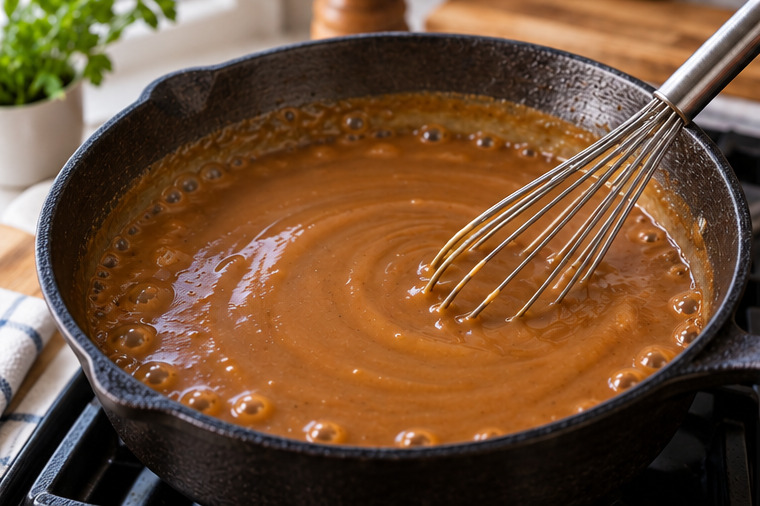
A gentle simmer is part of the comfort-food magic in Southern Stewed Chicken and Gravy. Follow its cooking times for the chicken while keeping an eye on the gravy’s consistency.
5. Season and Adjust
Taste your gravy, then add salt, black pepper, and any additional seasonings.
If it’s too thick, whisk in broth a tablespoon or two at a time. If it’s too thin, let it simmer a little longer, stirring frequently.
Remember, gravy thickens more as it cools, so take it off the heat while it’s still easy to pour.
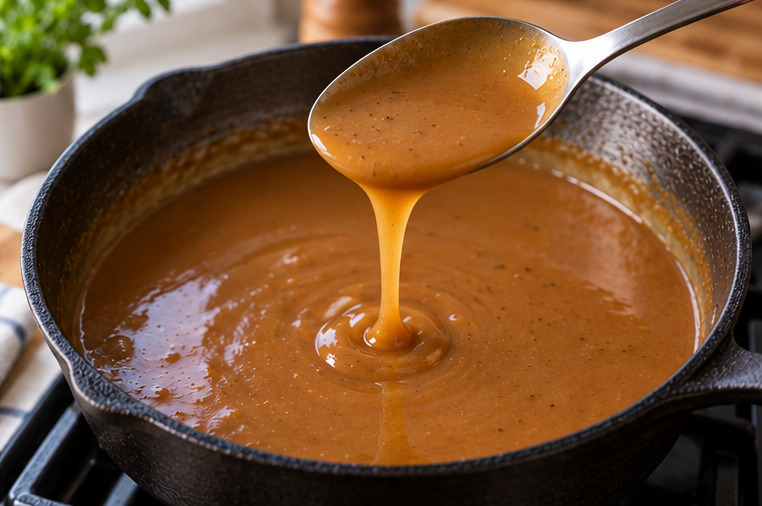
If you enjoy a peppery sauce, Chicken Au Poivre is another dinner to try. Its creamy peppercorn sauce offers a different take on a rich skillet meal.
How to Fix Lumpy Gravy
A few lumps don’t mean you have to start over.
Whisk it off the heat. Remove the pan from the burner and whisk vigorously to break up small lumps. If the gravy is very thick, add a splash of broth to loosen it.
Strain it. Pour the gravy through a fine-mesh strainer into a clean saucepan. This is a quick way to remove stubborn flour lumps.
Use an immersion blender. For persistent lumps, blend carefully with the blade fully submerged to avoid splashing hot gravy. Keep in mind that blending will also smooth out any onions or other ingredients you wanted to leave chunky.
If the gravy still tastes floury, return it to a gentle simmer and cook a little longer, stirring often.
For gravy dishes with intentional texture, like the onions in Smothered Hamburger Over Rice, whisk out flour lumps before combining everything whenever possible. You want to keep those flavorful ingredients intact.
Can You Thicken Gravy Without Adding More Flour?
Yes. If your finished gravy needs extra thickening, make a cornstarch slurry instead of sprinkling dry flour into the pan.
Mix 1 teaspoon of cornstarch with 1 tablespoon of cold water until completely smooth. Slowly stir it into the simmering gravy, then let it cook for about a minute before deciding whether you need more.
Always mix cornstarch with cold liquid first, and add the slurry in small amounts so the gravy doesn’t become too thick.
Ready to try a different style of gravy? Classic Chicken Fried Steak pairs a crisp coating with creamy gravy, while Turkey Stuffing Meatloaf with Gravy brings holiday-inspired flavor to dinner.
Tips for Better Homemade Gravy
- Measure your fat and flour. Too much flour can make the gravy heavy and pasty.
- Use moderate heat. High heat can scorch the roux and make the gravy harder to control.
- Whisk into the corners. Flour can collect where the sides meet the bottom of the pan.
- Season at the end. Broth and drippings become more concentrated as the gravy simmers.
- Keep extra broth nearby. A splash can loosen gravy that thickens while you finish the rest of dinner.
As you plan the rest of the plate, Southern Skillet Potatoes and Onions gives you another potato option, and Authentic Southern Dirty Rice brings a seasoned rice side to a Southern spread. Taste your whole meal before adding extra salt to the gravy.
What to Serve With Homemade Gravy
Spoon this gravy over creamy mashed potatoes, roasted chicken, rice, or pork chops. For a complete comfort-food plate, serve a side of potatoes and gravy alongside The Only Meatloaf You’ll Ever Need and Southern Fried Cabbage. Use chicken broth for a lighter, savory gravy or beef broth for a richer flavor that pairs well with beef dishes.
You don’t need a long ingredient list to make good gravy. Give the roux a little attention, pour slowly, and keep that whisk moving. You’ll have smooth, homemade gravy ready for your next Sunday dinner.