This post may contain affiliate links. Please read our disclosure policy.
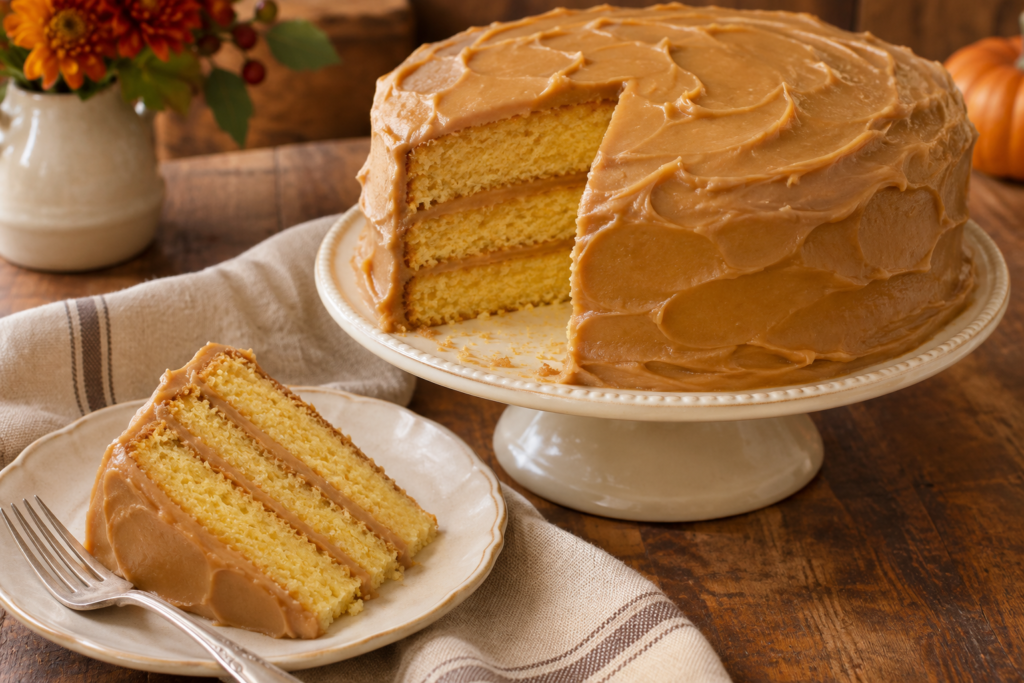
Table of Contents
- 🍽️ A Quick Look at the Recipe
- Why You’ll Love This Recipe
- Key Ingredients and Useful Tools
- How to Make Southern Caramel Cake
- Pro Tips and Caramel Troubleshooting
- Southern Caramel Cake Recipe
- Make-Ahead, Storage, and Serving
- What to Serve With Southern Caramel Cake
- Variations and Other Cake Options
- Frequently Asked Questions
- More AB Recipes for the Dessert Table
- Save This Recipe
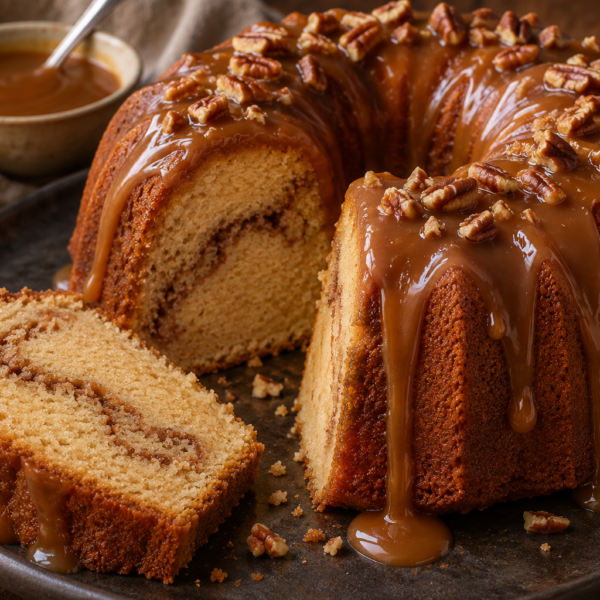
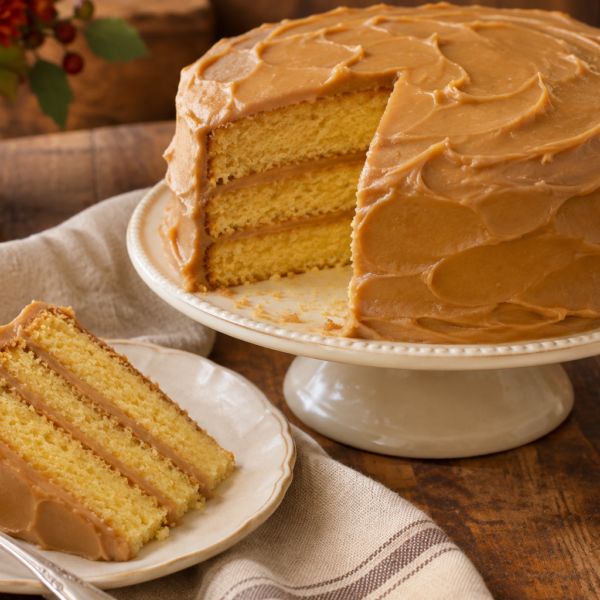
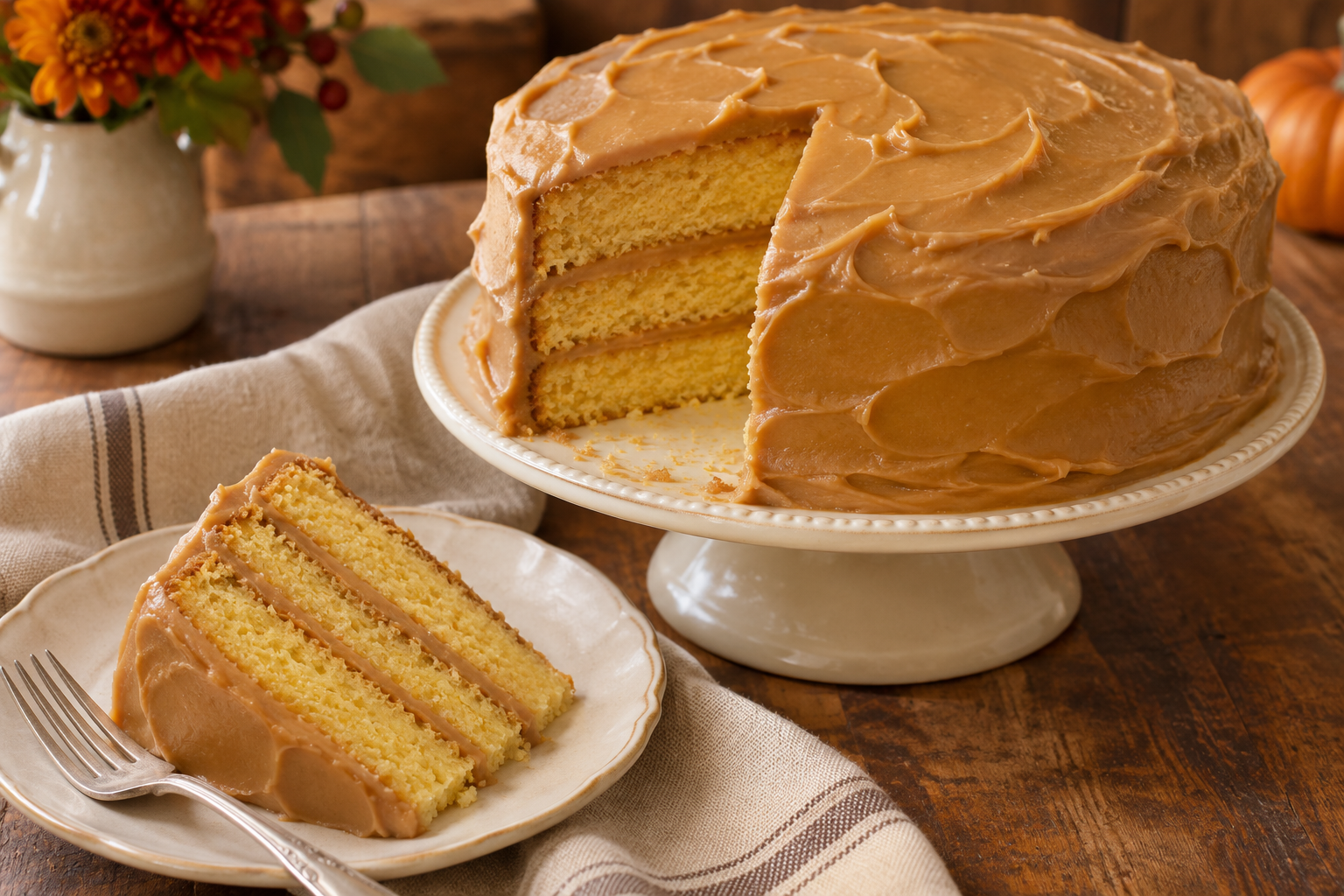
Southern caramel cake brings together tender yellow butter cake and a homemade caramel icing that sets into a soft, candy-like coating. Three layers make it a beautiful finish for Thanksgiving, Christmas, or a Sunday dinner worth slowing down for.
The flavor starts with real caramelized sugar. Give the layers time to cool, keep a thermometer handy, and have your cake plate ready before the icing reaches spreading consistency.
🍽️ A Quick Look at the Recipe
Recipe Name: Southern Caramel Cake
⏱️ Ready In: About 4½ hours, including cooling and setting (estimated)
👨👩👧👦 Serves: 16 slices
🥣 Main Ingredients: Butter, flour, sugar, eggs, evaporated milk
📖 Dietary Info: Contains wheat, dairy, and eggs
🔥 Flavor Profile: Buttery vanilla cake with deep caramel sweetness
⭐ Best For: Holiday dessert tables, celebrations, and Sunday dinner
Why You’ll Love This Recipe
The yellow butter cake has a tender crumb that stands up to the icing. Caramelizing part of the sugar adds depth, while evaporated milk gives the cooked icing a rich finish. You can bake the layers ahead and save the icing and assembly for the next day.
Key Ingredients and Useful Tools
Softened butter and room-temperature eggs help the batter mix evenly. Whole milk supplies moisture; all-purpose flour gives the layers enough structure to stack. Use evaporated milk in the icing, not sweetened condensed milk. Vanilla rounds out both components, and fine salt balances the sweetness.
For a future baking project, try Homemade Vanilla Extract. It needs at least eight weeks to develop, so use ready-to-use extract for this cake.
You’ll need round cake pans, parchment, a mixer, a heavy light-colored pot with plenty of room for bubbling caramel, an offset spatula, cooling racks, and a candy thermometer. Measure carefully and get everything ready before heating the sugar.
I earn commissions from qualifying purchases made through the Amazon links in this post. As an Amazon Associate I earn from qualifying purchases.
A Spring Chef measuring cup and spoon set helps measure and level dry ingredients. Pyrex mixing bowls keep the dry mixture and other ingredients organized before mixing.
The silicone basting brush from AB’s shop is useful for greasing the pans. A SnG Food Thermometer can help check the icing as it cools; use a candy thermometer suited to continuous monitoring for the cooking stage.
How to Make Southern Caramel Cake
1. Prepare and mix. Heat the oven to 350°F and prepare the cake pans with grease, parchment, and flour. Whisk the dry ingredients separately. Cream the butter and sugar until lighter and fluffy, then beat in the eggs individually and add vanilla.
2. Finish the batter and bake. Alternate the dry mixture and milk on low speed, beginning and ending with flour. Stop once combined. Divide evenly among the pans and bake about 25–30 minutes, checking from 23 minutes. Look for springy tops and a tester with moist crumbs but no wet batter.
3. Cool completely. Leave the cakes in their pans for 10 minutes, then turn onto racks and remove the parchment. Warm cake will soften the icing, so give the layers enough time to cool all the way through.
4. Build the caramel flavor. Warm the evaporated milk mixture in one saucepan. In a separate roomy pot, cook the reserved sugar with water until amber. Take it off the heat and carefully add the warm milk mixture in stages. Stand back from the steam and bubbling.
5. Cook, cool, and beat the icing. Stir over medium-low heat until any hardened caramel dissolves, then cook to 237°F near sea level. Cool to about 180°F before beating until thick and spreadable. Temperature and texture matter more than a fixed minute count.
6. Stack and finish. Spread icing between the cooled layers, then over the top and sides. Work promptly while it spreads easily. Let it set for about an hour before cutting.
Pro Tips and Caramel Troubleshooting
Keep the crumb tender. Spoon and level the flour rather than packing it into the cup. Overmixing after flour goes in can make the cake tougher.
Watch the sugar closely. A light-colored pot makes amber caramel easier to see. Do not taste hot caramel or touch it with your fingers. If it smells burnt, start the caramel stage again; bitterness will carry into the icing.
Adjust the texture gently. Thin icing may need more cooling and beating. If it firms up before you finish frosting, add a little warm milk gradually. Keep the cake layers and tools ready so you do not lose the spreading window.
Account for altitude. The icing target assumes near sea level. Measure the boiling point of water in your kitchen and reduce the candy target by the difference from 212°F. Keep the thermometer tip off the bottom of the pot.
Summarize and Save
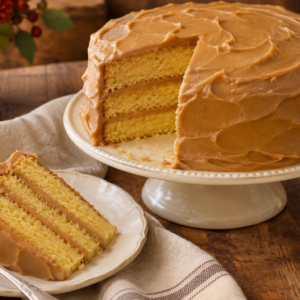
Southern Caramel Cake
Ingredients
Yellow Butter Cake
- 3 cups all-purpose flour spooned and leveled, plus extra for pans
- 1 tablespoon baking powder
- ¾ teaspoon fine salt
- 1 cup unsalted butter softened, plus extra for pans
- 1¾ cups granulated sugar
- 4 large eggs at room temperature
- 1 tablespoon vanilla extract
- 1¼ cups whole milk at room temperature
Cooked Caramel Icing
- 3 cups granulated sugar divided
- 2 tablespoons water
- 1 12-ounce can evaporated whole milk not sweetened condensed milk
- ½ cup unsalted butter cut into pieces
- ¼ teaspoon fine salt
- 1 teaspoon vanilla extract
- 1–3 tablespoons warm whole milk only if needed to loosen the icing
Instructions
Bake the Cake
- Heat the oven to 350°F. Grease three 8-inch round cake pans at least 2 inches deep. Line the bottoms with parchment, grease the parchment, and lightly flour the pans.
- Whisk together the flour, baking powder, and salt. In a separate large bowl, beat the softened butter and sugar for 3–4 minutes until pale and fluffy, scraping the bowl as needed.
- Beat in the eggs one at a time, followed by the vanilla. On low speed, add the flour mixture in three additions, alternating with the milk in two additions. Begin and end with flour; mix only until incorporated, then scrape and fold briefly to catch unmixed batter.
- Divide the batter evenly among the pans. Bake for about 25–30 minutes, checking from 23 minutes. The tops should spring back lightly and a toothpick should have a few moist crumbs but no wet batter.
- Cool in the pans for 10 minutes, then turn onto racks and remove the parchment. Let cool completely, about 60–90 minutes more as needed. Have the cooled layers, cake plate, and offset spatula ready before finishing the icing.
Cook the Icing and Assemble
- In a saucepan, gently heat 2½ cups of the icing sugar with the evaporated milk, butter, and salt, stirring until dissolved. Keep warm without boiling.
- Combine the remaining ½ cup sugar and the water in a heavy, light-colored pot with at least 4-quart capacity. Stir to moisten, then cook over medium heat without stirring until amber. Swirl the pot gently if needed. Remove from the heat before the caramel becomes very dark or smells burnt.
- Carefully add the warm milk mixture in several additions, keeping hands and face back from the hot steam and bubbling. Return to medium-low heat and stir until any hardened caramel dissolves.
- Cook, stirring steadily across the bottom to prevent scorching, until a candy thermometer reads 237°F near sea level. Keep its tip in the icing without touching the pot. This stage may take about 15–25 minutes; use temperature rather than the clock.
- Remove from the heat, stir in vanilla, and let cool undisturbed to about 180°F. Beat with a hand mixer on low, then medium, for roughly 5–12 minutes, until thick enough to spread and a ribbon briefly holds its shape. Avoid splashing the hot icing.
- Spread about ½ cup icing between each cake layer. Immediately cover the top and sides with the remaining icing. If it stiffens before you finish, stir in the optional warm milk 1 teaspoon at a time until spreadable. Let the cake set for about 1 hour before slicing into 16 portions.
Notes
- Spoon and level the flour, and stop mixing once the batter comes together to help keep the cake tender.
- Frost completely cooled layers and work promptly once the icing is spreadable; cooked caramel icing firms as it cools.
- The 237°F icing target assumes near sea level. At altitude, reduce it by the difference between 212°F and your local measured boiling-water temperature.
Nutrition
Nutrition information is automatically calculated, so should only be used as an approximation.

Like This? Leave a comment below!
Make-Ahead, Storage, and Serving
Bake the layers a day ahead, cool fully, and wrap tightly. For longer storage, freeze the unfrosted layers well wrapped for up to two months for best quality, then thaw wrapped before icing. Make the icing when you are ready to assemble; it becomes harder to spread as it sets.
Keep the finished cake covered and refrigerated, and enjoy within 3–4 days. For a softer crumb, bring individual slices out shortly before serving rather than repeatedly warming the whole cake. Freezing frosted slices can change the icing’s surface, so unfrosted layers are the better make-ahead option.
What to Serve With Southern Caramel Cake
Coffee or unsweetened tea gives this rich dessert a simple finish. Keep the serving slice modest after a full holiday meal.
For the dinner before dessert, pair Cajun Roasted Turkey Breast with Southern Baked Mac and Cheese. Add Garlic Butter Creole Green Beans and Soft and Fluffy Dinner Rolls for a Southern holiday menu.
Variations and Other Cake Options
Keep the cooked caramel icing for the classic version. A small sprinkle of flaky salt on each served slice adds contrast without changing the cake batter. Do not swap in sweetened condensed milk or reduce the icing sugar without reworking the candy method.
If you want another cake direction, Red Velvet Cake with Cream Cheese Frosting and Chocolate Cake bring different flavors to a celebration. For a simpler-shaped cake, choose Lemon Pound Cake or Million Dollar Pound Cake with Vanilla Butter Glaze. These are separate recipes, not one-for-one substitutions for this batter.
Frequently Asked Questions
Is caramel icing the same as caramel sauce? No. This icing is cooked, cooled, and beaten until it can coat the layers and set. A pourable caramel sauce will not hold the same way between cake layers.
Can I bake it in different pans? Changing pan size changes batter depth and baking time. Use the specified pans for this version rather than assuming the same timing works in a Bundt or sheet pan.
Why did the icing turn grainy? Undissolved sugar, crystals carried down from the pan sides, or beating at the wrong stage can affect texture. Dissolve the milk mixture’s sugar fully, avoid stirring the initial caramel after it starts cooking, and use the temperature cues.
More AB Recipes for the Dessert Table
Buttery cakes: Apple Cider Donut Bundt Cake brings fall spice, Peach Cobbler Pound Cake adds fruit, and Rum Pecan Cake offers a nutty celebration option.
Caramel cheesecakes: Try Fried Apple Caramel Crumb Cheesecake, Caramel Cinnamon Crumble Cheesecake, or Sweet Potato Caramel Crumble Cheesecake when you want a different caramel dessert.
Holiday pies and cookies: Southern Pumpkin Pie, Sweet Potato Pie with Three Topping Options, and Brown Butter Pecan Cookies give guests a choice of familiar holiday flavors.
Pudding options: Chessmen Banana Pudding and Bananas Foster Banana Pudding are creamy alternatives for another gathering. Choose a few favorites rather than trying to make every dessert at once.
Save This Recipe
Save this Southern caramel cake for your next holiday table or family celebration.