This post may contain affiliate links. Please read our disclosure policy.
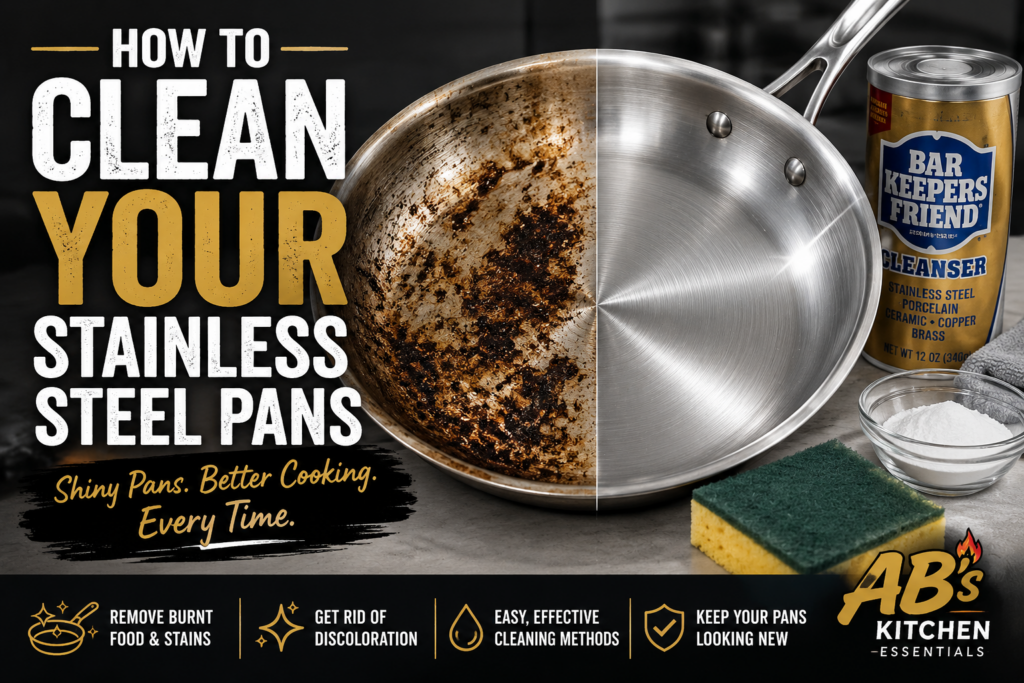
Table of Contents
- Quick Answer: How Do You Clean a Stainless Steel Pan?
- Why Stainless Steel Pans Get Dirty So Fast
- What You Need to Clean a Stainless Steel Pan
- Step 1: Let the Pan Cool Down a Little
- Step 2: Clean Light Sticking with Hot Water
- Step 3: Simmer Water for Tough Stuck-On Food
- Step 4: Use Baking Soda for Burnt Spots
- Step 5: Use Vinegar for Cloudy Spots and Mineral Stains
- Step 6: Use Bar Keepers Friend for Rainbow Stains and Heat Marks
- What Not to Use on Stainless Steel Pans
- How to Clean the Outside Bottom of a Stainless Steel Pan
- How to Keep Food From Burning Onto the Pan Next Time
- Can Stainless Steel Go in the Dishwasher?
- FAQ: Cleaning Stainless Steel Pans
- Final Thoughts
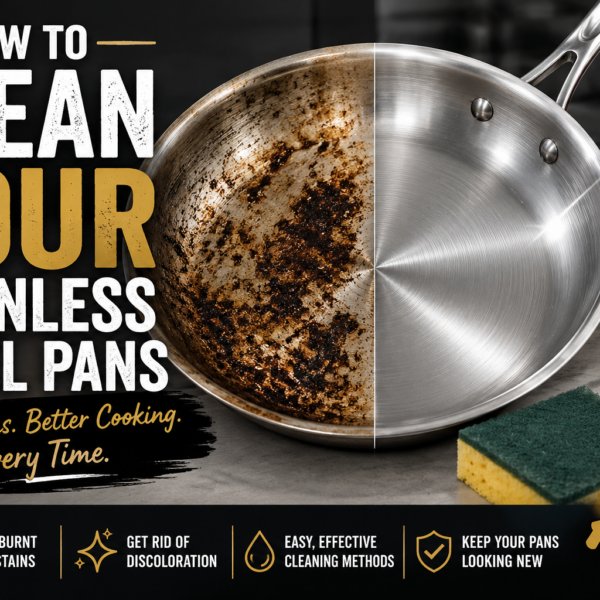
Learn how to clean your stainless steel pan the right way, from light stuck-on food to burnt spots, rainbow stains, and cloudy residue.
Quick Answer: How Do You Clean a Stainless Steel Pan?
The easiest way to clean a stainless steel pan is to add hot water while the pan is still warm, let the stuck-on food loosen, then scrape gently with a wooden spoon or spatula before washing with dish soap and a sponge. For tougher burnt spots, simmer water in the pan for a few minutes, then use baking soda or a stainless steel cleaner like Bar Keepers Friend if needed.
Do not panic if your pan has brown spots, rainbow colors, or cloudy marks. Most stainless steel stains are normal and can be cleaned. And even if the pan does not look brand new, it can still cook just fine.
Why Stainless Steel Pans Get Dirty So Fast
Stainless steel pans are made for real cooking. They are built for searing, browning, sautéing, building fond, and making sauces right in the pan. That is why they can look a little rough after a good cook.
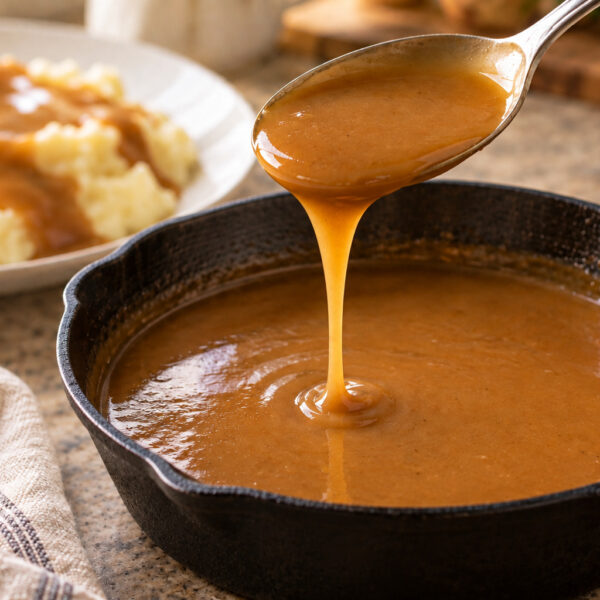
When you cook chicken, steak, pork chops, shrimp, onions, sausage, or vegetables in stainless steel, little browned bits can stick to the bottom. Those bits are called fond, and they are packed with flavor. If you are making a sauce or gravy, that is exactly what you want.
The trick is knowing the difference between good browned bits and burnt-on mess. Good browned bits can turn into sauce. Burnt food needs to be loosened and cleaned before it gets worse.
If you need help cooking with stainless steel before the cleaning part, start with my guide on how to cook with stainless steel pans without food sticking.
What You Need to Clean a Stainless Steel Pan
You do not need a whole cabinet full of special tools. Most of the time, you can clean stainless steel with simple kitchen basics.
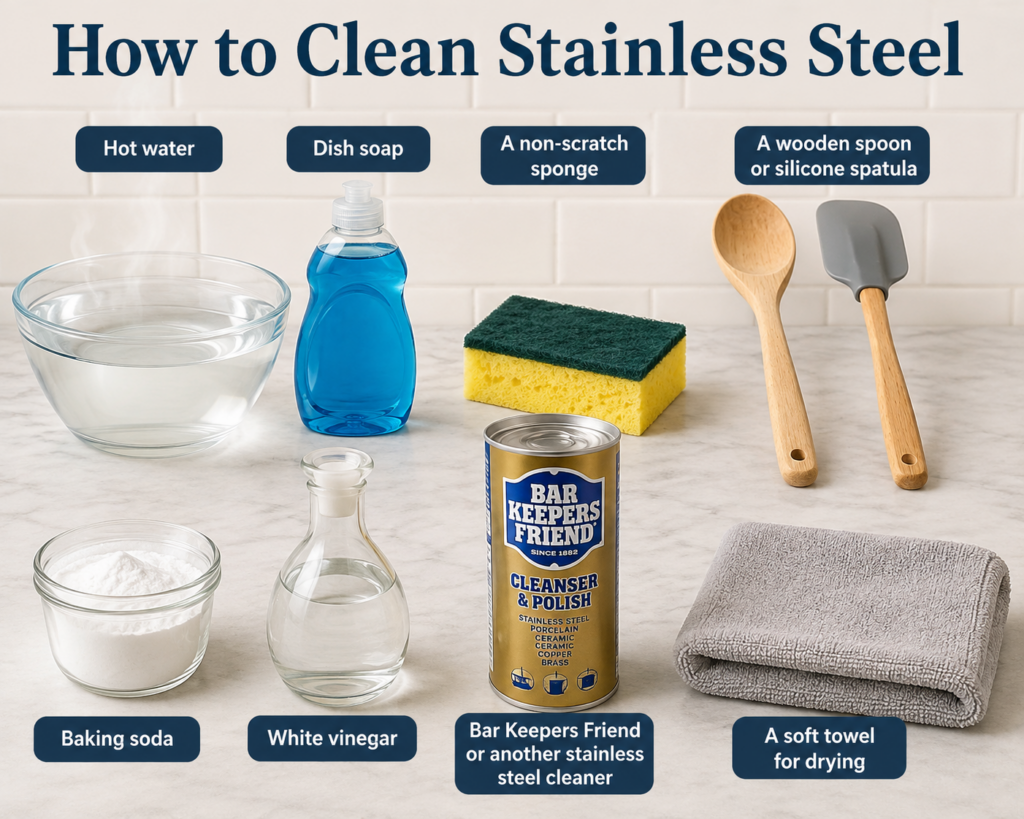
- Hot water
- Dish soap
- A non-scratch sponge
- A wooden spoon or silicone spatula
- Baking soda
- White vinegar
- Bar Keepers Friend or another stainless steel cleaner
- A soft towel for drying
You want to clean the pan without beating it up. Stainless steel is strong, but you still do not need to attack it like you are sanding down a deck.
Step 1: Let the Pan Cool Down a Little
Before you start cleaning, let the pan cool down for a minute or two. You do not want to take a screaming hot pan and shock it with cold water. That sudden temperature change can warp the pan over time.
The pan can still be warm. Warm is good because it helps loosen food. Just do not go from blazing hot to cold water.
- If the pan is warm, use hot water.
- If the pan is cool, start with warm or hot water.
- Avoid dumping cold water into a very hot stainless steel pan.
Step 2: Clean Light Sticking with Hot Water
If you only have light stuck-on food, this is the easiest fix.
- Pour a little hot water into the pan.
- Let it sit for a few minutes.
- Use a wooden spoon or silicone spatula to loosen the bits.
- Wash with dish soap and a sponge.
- Rinse well and dry completely.
A lot of people start scrubbing too hard too fast. Let the water do some of the work first. If the food is not badly burnt, hot water and a little patience will usually handle it.
Step 3: Simmer Water for Tough Stuck-On Food
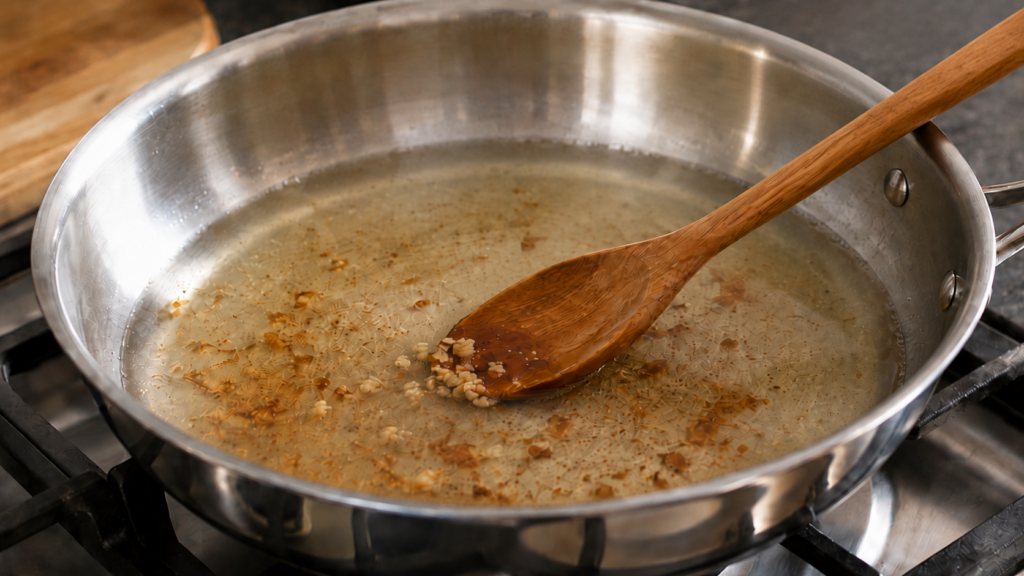
When food is really stuck, put the pan back on the stove and let heat help you out.
- Add enough water to cover the stuck-on area.
- Place the pan over medium heat.
- Bring the water to a gentle simmer.
- Let it simmer for 3 to 5 minutes.
- Use a wooden spoon to scrape the bottom gently.
- Pour out the water and wash the pan with soap.
This works because the hot water softens the stuck food and helps release it from the steel. It is the same idea as deglazing a pan after cooking, except now your goal is cleaning instead of making sauce.
If there are browned bits in the pan and they are not burnt, you can also turn them into a quick pan sauce before cleaning. That is one of the reasons stainless steel is so useful.
Step 4: Use Baking Soda for Burnt Spots
Baking soda is one of the best simple tools for cleaning burnt stainless steel pans.
- Sprinkle baking soda over the burnt area.
- Add a small amount of water to make a paste.
- Let it sit for 10 to 15 minutes.
- Scrub gently with a non-scratch sponge.
- Rinse and repeat if needed.
For heavier burnt spots, add water and baking soda to the pan, bring it to a simmer, then let it cool before scrubbing. That extra heat helps break things loose.
Do not expect every burnt mark to disappear in one pass. Sometimes you need to repeat the process. That is normal.
Step 5: Use Vinegar for Cloudy Spots and Mineral Stains
If your stainless steel pan has cloudy white spots, that is usually from minerals in water or salt. It does not mean the pan is dirty in a dangerous way. It just needs a little acid to help clear it up.
- Add a splash of white vinegar to the pan.
- Wipe it around with a soft sponge or cloth.
- Let it sit for a few minutes.
- Rinse well with warm water.
- Dry the pan completely.
You can also boil a little water and vinegar in the pan for stubborn cloudy marks. Just do not mix vinegar with bleach or any harsh chemical cleaners.
Step 6: Use Bar Keepers Friend for Rainbow Stains and Heat Marks
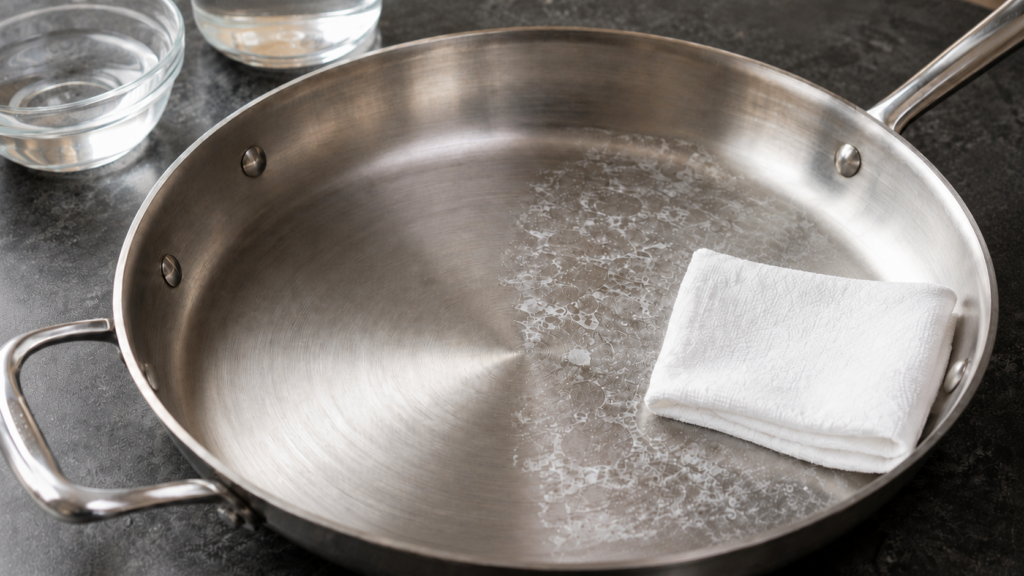
Sometimes stainless steel gets a rainbow-looking stain after high heat. You might see blue, purple, gold, or cloudy colors on the surface. That is common with stainless steel, especially after searing or heating the pan empty.
Those marks are usually cosmetic. The pan is not ruined. If you want to restore the shine, use a stainless steel cleaner like Bar Keepers Friend.
- Wet the pan.
- Sprinkle on a small amount of cleaner.
- Rub gently with a damp sponge.
- Do not let the cleaner sit too long.
- Rinse very well.
- Dry the pan completely.
Follow the cleaner directions on the package. A little goes a long way. You are cleaning the pan, not trying to polish a trophy.
What Not to Use on Stainless Steel Pans
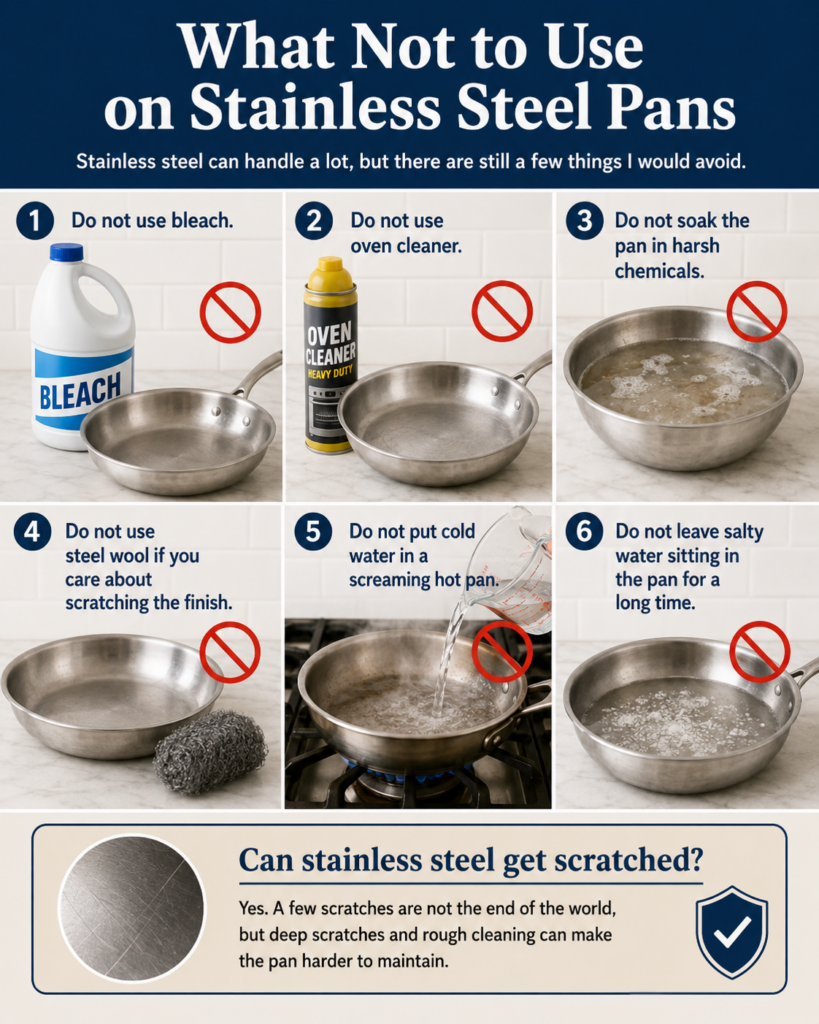
Stainless steel can handle a lot, but there are still a few things I would avoid.
- Do not use bleach.
- Do not use oven cleaner.
- Do not soak the pan in harsh chemicals.
- Do not use steel wool if you care about scratching the finish.
- Do not put cold water in a screaming hot pan.
- Do not leave salty water sitting in the pan for a long time.
Can stainless steel get scratched? Yes. A few scratches are not the end of the world, but deep scratches and rough cleaning can make the pan harder to keep looking nice.
How to Clean the Outside Bottom of a Stainless Steel Pan
The outside bottom of the pan can get brown, greasy, or stained from burners and high heat. That does not usually affect how the pan cooks, but if you want to clean it up, use the same basic approach.
- Turn the pan upside down in the sink.
- Wet the stained area.
- Sprinkle on baking soda or stainless steel cleaner.
- Scrub gently with a non-scratch sponge.
- Rinse well.
- Dry completely before putting it away.
If the bottom is discolored from years of cooking, do not stress over it. A stained bottom does not mean the pan is bad. That pan has been working.
How to Keep Food From Burning Onto the Pan Next Time
Cleaning is easier when the cooking is right. If food keeps burning onto your stainless steel pan, check your heat and timing.
- Preheat the pan over medium heat, not full blast.
- Dry meat, shrimp, fish, and vegetables before cooking.
- Add oil after the pan is hot.
- Use enough oil to coat the bottom lightly.
- Do not move the food too early.
- Lower the heat if the outside browns too fast.
- Do not overcrowd the pan.
- Deglaze the pan before the browned bits burn.
Most burnt stainless steel messes come from heat being too high for too long. Stainless steel likes control. Medium heat, a hot pan, enough fat, and patience will save you a lot of scrubbing.
Can Stainless Steel Go in the Dishwasher?
Some stainless steel pans are labeled dishwasher safe, but I still prefer hand washing. A dishwasher can leave water spots, dull the shine, and be rough on handles or bonded layers depending on the pan.
Hand washing does not take long if you loosen the food first. Hot water, soap, and a sponge will handle most jobs. Drying the pan right away also helps prevent water spots.
FAQ: Cleaning Stainless Steel Pans
How do you clean burnt food off a stainless steel pan?
Add water to the pan and simmer it for a few minutes to loosen the burnt food. Then scrape gently with a wooden spoon and wash with dish soap. For tougher spots, use baking soda and water to make a paste, let it sit, then scrub gently.
How do you remove rainbow stains from stainless steel?
Rainbow stains usually come from high heat. They are mostly cosmetic. Use white vinegar or a stainless steel cleaner like Bar Keepers Friend to help remove the discoloration, then rinse and dry well.
Can you use baking soda on stainless steel pans?
Yes. Baking soda is useful for stuck-on food and burnt spots. Mix it with a little water to make a paste, let it sit, then scrub gently with a non-scratch sponge.
Can you use vinegar on stainless steel pans?
Yes. White vinegar can help with cloudy mineral spots and light discoloration. Rinse the pan well afterward and dry it completely.
Is Bar Keepers Friend safe for stainless steel pans?
Bar Keepers Friend is commonly used on stainless steel cookware. Use a small amount, follow the directions, scrub gently, rinse thoroughly, and do not let it sit on the pan too long.
Why does my stainless steel pan have white spots?
White spots are often mineral deposits from water or salt. They can usually be cleaned with vinegar or a stainless steel cleaner. To prevent them, rinse well and dry the pan right after washing.
Do scratches ruin stainless steel pans?
No. Normal scratches do not usually ruin a stainless steel pan. The pan may not look brand new, but it can still cook well. Avoid aggressive scrubbing if you want to keep the finish looking cleaner.
Final Thoughts
A stainless steel pan does not have to look perfect to be a good pan.
Brown spots, cloudy marks, rainbow stains, and stuck-on food happen when you cook for real. The key is knowing how to loosen the food, clean the surface, and keep the pan ready for the next meal.
Start simple. Hot water, dish soap, and a sponge will handle most cleaning. If the pan needs more help, use baking soda, vinegar, or a stainless steel cleaner. And next time, keep the heat under control, deglaze before the fond burns, and dry the pan before putting it away.
That stainless steel pan is built to work. Clean it right, cook with it right, and it will keep showing up for you in the kitchen.